Introduction
Working around live electrical equipment always carries a hidden hazard: arc flash. A sudden electrical arc explosion can release extreme heat, intense light, pressure waves and flying debris, causing severe burns, eye injuries or even fatal accidents for electrical workers. To mitigate these risks, the arc flash kit has become essential personal protective equipment (PPE) for electricians, maintenance crews, power plant staff and industrial electrical teams worldwide.If you work in the electrical industry or manage workplace safety, you may ask: What is an arc flash kit exactly? What does it include, and when should you use it? In this comprehensive guide, we will explain the definition, components, classifications, standards, selection tips and usage rules of arc flash kits, helping you fully understand this critical safety gear.
What Is an Arc Flash Kit?
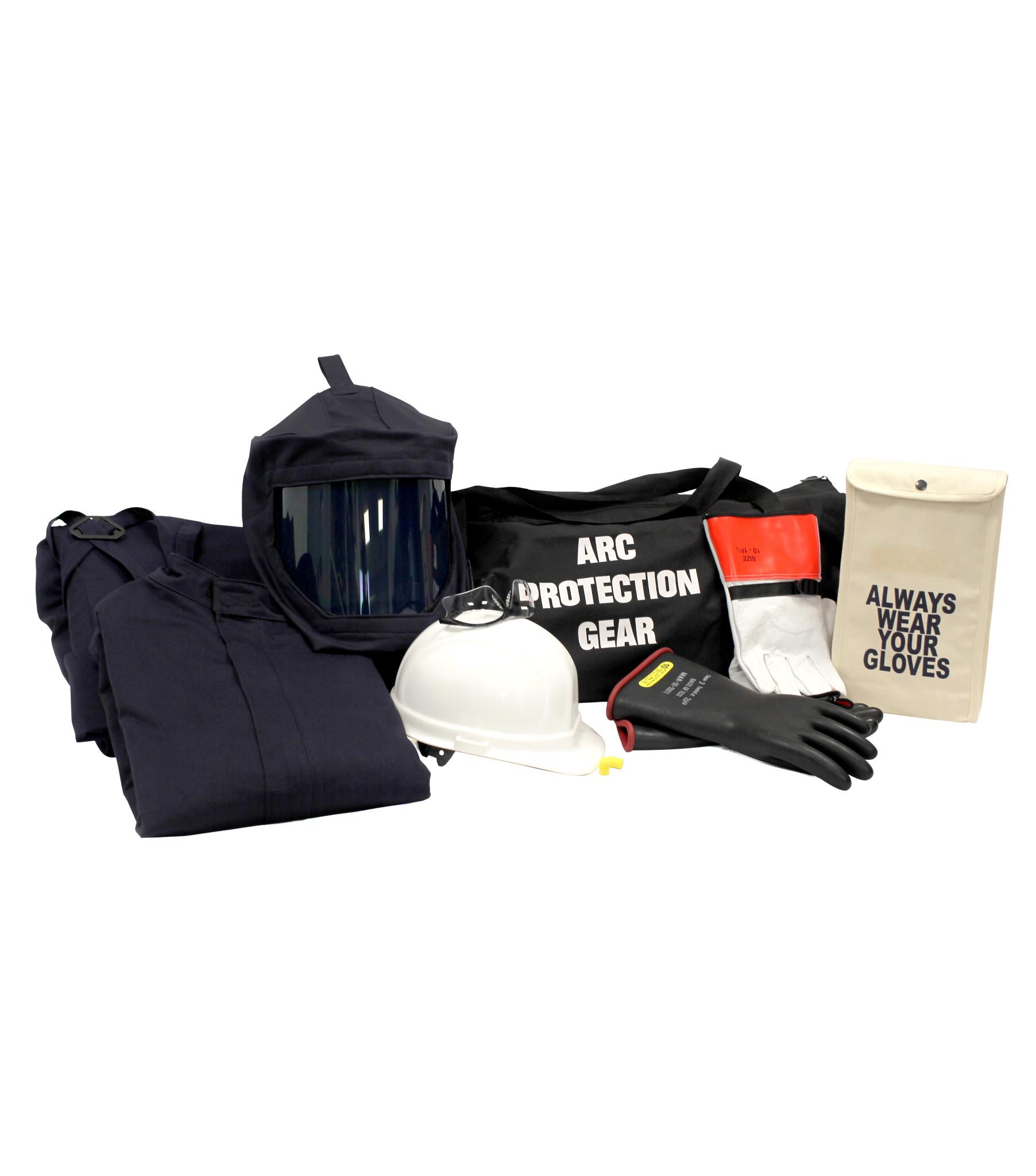
An arc flash kit is a complete set of arc-rated personal protective equipment designed to shield workers from injuries caused by arc flash and arc blast hazards. Unlike single protective clothing, it is an all-in-one PPE package that covers the entire body, head, face, hands and feet.Manufactured strictly in line with international electrical safety standards such as NFPA 70E and IEC 61482, arc flash kits are made of inherently flame-resistant (FR) and arc-resistant materials. They are pre-assembled for quick wear, ideal for routine electrical inspections, equipment maintenance, circuit testing and emergency electrical operations.The core purpose of an arc flash kit is to: Resist extreme thermal energy from arc flashes Prevent flame spread and molten material dripping Protect against ultraviolet light, flying fragments and high-pressure blast Reduce the risk of second-degree burns and traumatic injuries
Core Components of a Standard Arc Flash Kit
A qualified full-body arc flash kit contains multiple matched pieces of PPE. Every item is arc-rated and compatible to ensure overall protection. Below are the standard components:
1. Arc Flash Suit (Jacket + Pants/Overall)
This is the main body protection part. Most arc flash suits adopt multi-layer arc-resistant fabric, typically made of aramid, Nomex, Kevlar or PBI fibers. These materials feature permanent flame resistance and will not lose protective performance after repeated washing.Suits are divided into two styles: separate jacket and pants, or one-piece overall. They are lightweight, breathable and tear-resistant, suitable for long-hour work. All seams use arc-resistant threads to avoid breakage during arc exposure.
2. Arc Flash Hood & Face Shield
The head and face are the most vulnerable areas during an arc flash. The dedicated arc flash hood fully covers the head, neck and jaw, paired with a high-impact, anti-scratch arc-rated face shield.The shield blocks intense arc light, UV radiation, sparks and flying debris. Some upgraded models come with anti-fog coating for better visibility in humid working environments. The hood is connected closely with the suit collar to leave no exposed gaps.
3. Arc-Rated Gloves
Regular rubber insulating gloves cannot resist arc flash heat. Arc flash gloves are made of thick FR leather or composite arc-resistant materials, combining electrical insulation, flame resistance and anti-scald performance. They protect hands from high temperature, electric shock and sharp fragments.Different voltage and arc rating gloves are matched with corresponding kit levels for different working scenarios.
4. Arc Flash Boots / FR Footwear
Arc flash boots are reinforced safety boots with flame-resistant uppers, anti-slip soles and steel toe caps. They prevent burns, punctures and impact injuries from falling objects or blast waves. Some styles also have heat-resistant insulation for extra protection.
5. Auxiliary Accessories
Complete arc flash kits usually include supporting parts: Arc-rated balaclava: Extra protection for the neck and lower face Reflective tape: Improves visibility in dim industrial environments Storage bag: For neat storage and quick carrying of the whole kit Safety goggles: Worn under the face shield for double eye protection
Arc Flash Kit Classifications (NFPA 70E CAT Levels)
Arc flash kits are classified by Arc Thermal Performance Value (ATPV) under NFPA 70E, the most widely recognized standard in North America and global industrial fields. The ATPV value (unit: cal/cm²) indicates the maximum thermal energy the kit can withstand to prevent second-degree burns. There are four main categories:
CAT 1 (≥4 cal/cm²) Light-duty arc flash kit for low-risk electrical work, such as basic circuit checking and low-voltage equipment operation. Compact and lightweight, for daily routine tasks.
CAT 2 (≥8 cal/cm²) The most popular and widely used type. Suitable for most general industrial electrical maintenance, medium-voltage cabinet operation and on-site wiring work. Balances protection and comfort.
CAT 3 (≥25 cal/cm²) Heavy-duty protection for high-risk environments, including high-voltage equipment maintenance, substation inspection and power distribution room operations. Features thickened multi-layer fabrics and enhanced overall protection.
CAT 4 (≥40 cal/cm²) Highest-level arc flash kit for extreme high-risk scenarios: high-voltage power station work, live-line operation and large power equipment troubleshooting. Full heavy-duty design with maximum thermal and blast resistance.
Key Industry Standards for Arc Flash Kits
To guarantee safety, all qualified arc flash kits must comply with authoritative international standards: NFPA 70E: Primary standard for electrical workplace safety in the United States, defines CAT levels, ATPV values and performance requirements. ASTM F1959: Test method for measuring the arc thermal performance value of protective clothing. ASTM F1506: Standard for flame-resistant textile materials used in electrical worker clothing. IEC 61482: International standard for arc protective clothing, widely adopted in Europe, Asia and other regions. ISO & CE Certification: Required for global export and commercial use. Reliable arc flash kits will clearly mark the standard compliance, CAT rating, ATPV value and batch information on labels for traceability.