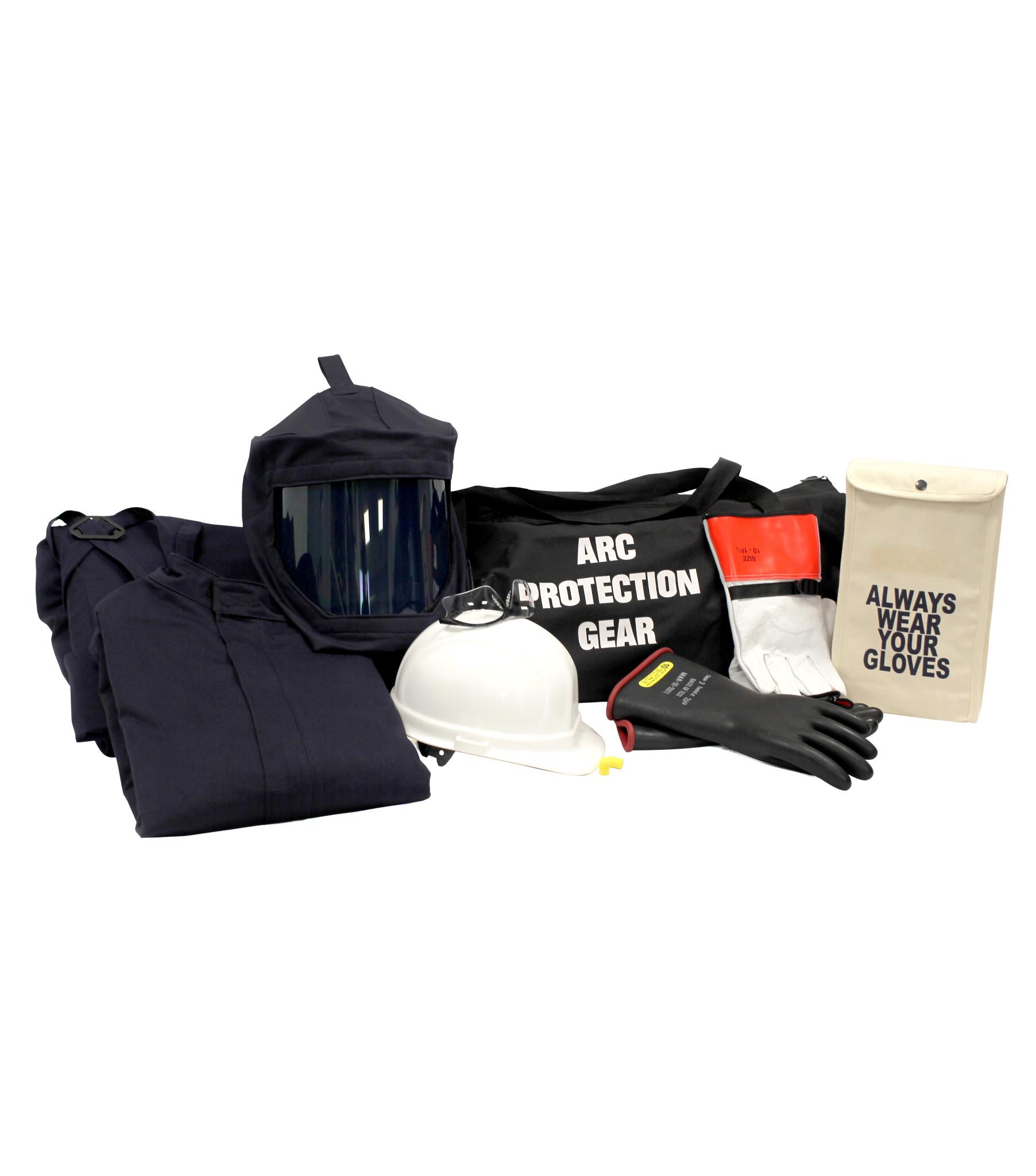
When is arc flash ppe required and Affected Industries
In industrial electrical work, electric shock is a well-recognized visible hazard, while arc flash is a fatal and easily overlooked hidden danger. Caused by short circuits, poor contact, or operational errors, an arc flash is an air breakdown discharge that generates extreme temperatures of thousands of degrees Celsius, powerful blast waves, and intense light within milliseconds. It can result in severe burns, permanent eye damage, equipment destruction, and even explosions. In accordance with NFPA 70E and OSHA workplace safety standards, arc flash protection is not an optional precaution but a mandatory safety requirement for specific working scenarios and industries. Accurately identifying when protection is needed and which work environments are high-risk is essential for preventing arc flash incidents.
I. Core Scenarios Where Arc Flash Protection Is Required
The standard for requiring arc flash protection does not depend solely on voltage levels. The key determining factors are whether workers are within the arc flash boundary and whether energized work is being performed. Arc flash PPE and safety protocols must be implemented whenever arc flash hazards are present. The mandatory application scenarios are categorized as follows.
First, protection is required for all energized work at 50 volts or higher. The 50-volt threshold is the recognized safety limit for hazardous electrical exposure. Most industrial equipment, including distribution panels, transformers, busbars, and motor control systems, far exceeds this voltage. Arc flash protection is mandatory for live tasks such as voltage testing, circuit inspection, parameter adjustment, and troubleshooting when de-energization and Lockout/Tagout (LOTO) procedures cannot be applied. Routine live inspections, terminal tightening, and instrument connection are among the most accident-prone operations.
Second, arc flash protection is compulsory when opening enclosures on energized equipment. Closed electrical doors, junction boxes, and protective covers isolate internal components and minimize arc flash exposure. However, opening live panels, switchgear, variable frequency drive cabinets, and transformer enclosures exposes bare conductors and contacts. Dust, moisture, and accidental contact can instantly trigger short-circuit arcs, creating extreme hazard conditions that require full arc flash personal protective equipment.
Third, protection is necessary for continuous operational systems that cannot be de-energized. Many critical production systems and emergency power supplies cannot be shut down due to risks of production shutdown, data loss, or compromised public services. Maintenance, switching operations, and hazard inspections on these live systems cannot utilize LOTO protocols, leaving workers continuously exposed to arc flash risks. Complete arc flash protection measures must be strictly enforced during all such tasks.
Fourth, protection is required within labeled arc flash hazard zones. Electrical codes mandate that all high-voltage and high-risk equipment be marked with arc flash warning labels. These labels indicate incident energy levels, required PPE categories, and safe working boundaries. Regardless of task complexity, any work performed within the defined arc flash boundary must comply with the corresponding level of arc flash protective clothing, face shields, and gloves.
Conversely, dedicated arc flash PPE is not required under specific safe conditions: when the incident energy is below 1.2 cal/cm² (the threshold for second-degree burns), when equipment is fully de-energized and properly locked and tagged out, or when workers remain outside the established arc flash boundary. In these cases, non-melting cotton clothing is sufficient for basic protection.
II. Key Industries Affected by Arc Flash Hazards
Arc flash hazards exist in every sector that generates, distributes, or utilizes complex electrical systems, not limited only to the power industry. All workplaces with live electrical maintenance and high-power equipment face inherent arc flash risks, especially the following eight high-risk industries.
Power Generation and Public Utilities face the most severe arc flash threats. Power plants, substations, transmission and distribution facilities frequently perform live switching, busbar maintenance, and fault recovery on high-voltage and extra-high-voltage equipment. Arc flash energy levels in these environments are extremely high, and any incident can result in catastrophic damage, making this industry the most strictly regulated for arc flash safety.
Petroleum, Chemical and Energy Processing industries face combined hazards of high temperature, high pressure, and flammable materials. Refineries, chemical parks, offshore platforms, and energy storage stations operate electrical systems under harsh conditions. Aging wiring, corrosion, and humidity easily trigger arc flash faults. Additionally, arc flash extreme heat can ignite flammable gases and liquids, causing secondary explosions and severe industrial accidents, demanding rigorous arc flash protection standards.
General Manufacturing has frequent arc flash exposure. Automotive, food and beverage, pharmaceutical, and mechanical factories utilize extensive motor control centers, variable frequency drives, and large-scale power distribution systems. Since production lines cannot be shut down frequently, live debugging, equipment maintenance, and routine troubleshooting are daily operations. Workers face repeated arc flash exposure, making manufacturing the most common sector for minor and moderate arc flash incidents.
Data Centers and High-Tech Facilities require non-stop energized operations. Server farms, cloud computing hubs, and communication stations rely on 24/7 UPS and high-density power distribution systems that cannot be de-energized. Inspections, circuit upgrades, and fault handling must be conducted live. Arc flash failures in these facilities lead to massive data loss and network paralysis, resulting in severe economic consequences.
Healthcare Facilities require strict arc flash safety for public welfare. Hospitals, emergency centers, and research laboratories depend on uninterruptible power for life-support systems and medical devices. Electrical maintenance must be performed on live circuits to avoid disrupting patient care, making proper arc flash protection indispensable for electrical staff.
Construction and Facility Maintenance contain hidden arc flash risks. Temporary construction power, commercial building distribution rooms, HVAC systems, and fire protection power equipment involve irregular maintenance and modification work. Hazards are often underestimated by on-site workers, leading to a high number of grassroots electrical safety incidents.
Renewable Energy and Transportation face rapidly growing arc flash risks. Solar farms, wind power stations, battery energy storage systems, and EV charging infrastructure widely adopt high-voltage DC power. DC arcs are harder to interrupt and more concealed than AC arcs. Meanwhile, electrified railways and port logistics hubs operate high-power electrical systems continuously, making arc flash protection a standard safety requirement.
III. Conclusion: Arc Flash Protection as a Fundamental Electrical Safety Baseline
Arc flash incidents are sudden, highly destructive, and often fatal. Most accidents stem from underestimated risks and inadequate safety procedures. Arc flash protection is not redundant safety equipment but a mandatory defense against lethal electrical hazards. Whether in high-voltage power operations, industrial manufacturing, or public facility maintenance, all live electrical work must match appropriate PPE levels and standardized protocols based on risk assessment. Only by accurately identifying hazards and implementing full-compliance arc flash protection can industries eliminate electrical accidents and establish a solid safety foundation for all electrical workers.