Arc Flash Clothing Standards by Country: IEC, NFPA, GB & Global GuideArc Flash Clothing Standards by Country: IEC, NFPA, GB & Global Guide
Arc Flash Clothing Standards by Country: IEC, NFPA, GB & Global Guide
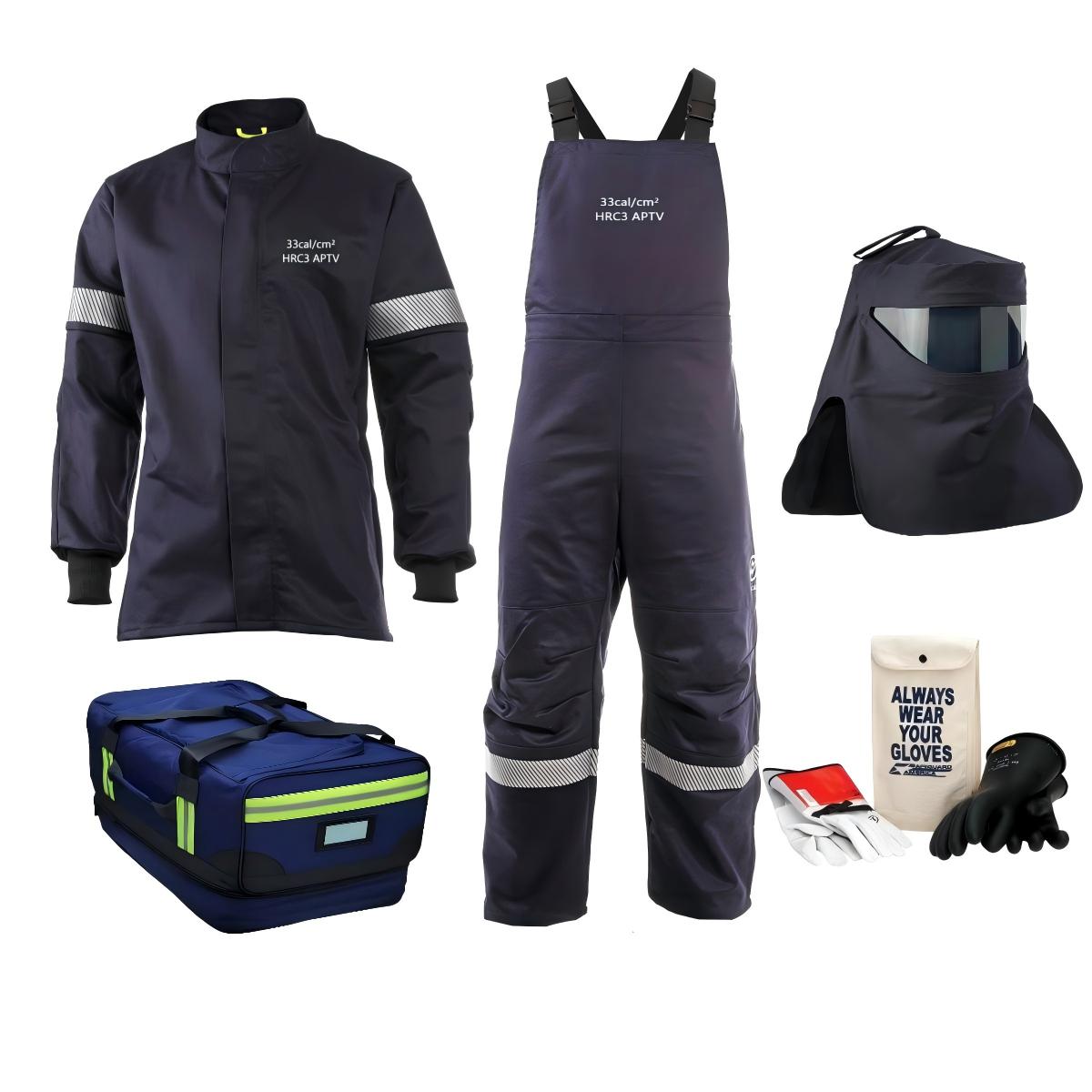
Arc flash hazards pose severe risks to electrical workers worldwide, with temperatures reaching 35,000°F (19,000°C) in milliseconds. Selecting compliant arc flash clothing is critical for safety and regulatory adherence. This guide breaks down arc flash clothing standards by country, including key global norms (IEC, NFPA), regional requirements (EU, China, US), and critical performance metrics like ATPV, EBT, and ELIM. Whether you’re sourcing for industrial electrical maintenance, power utilities, or petrochemical operations, understanding these standards ensures your PPE meets local and international safety benchmarks.
Why Arc Flash Clothing Standards Matter
Arc flash incidents release explosive energy, causing second-degree burns, fabric ignition, or fatal injuries without proper protection. Standards define minimum performance requirements, test methods, and classification systems to ensure arc-rated (AR) clothing can withstand specific energy levels. Compliance not only protects workers but also avoids legal penalties and workplace accidents.
Global Core Standard: IEC 61482 (International Electrotechnical Commission)
The IEC 61482 series is the global benchmark for arc flash protective clothing, adopted by most countries as a base or equivalent standard. It specifies test protocols, performance criteria, and classification for garments protecting against arc thermal hazards.
Key IEC 61482 Parts
- IEC 61482-1-1: Open arc test method—measures ATPV (Arc Thermal Performance Value) and EBT (Energy Break-open Threshold) in cal/cm² or J/cm².
- IEC 61482-1-2: Box test method—classifies garments into APC 1 (4kA) and APC 2 (7kA) based on arc current resistance.
- IEC 61482-2:2020: General requirements—minimum threshold: ELIM ≥3.2 cal/cm² (130 kJ/m²) or ATPV/EBT ≥4 cal/cm² (167.5 kJ/m²).
Critical Metrics Defined
- ATPV: Energy causing 50% risk of second-degree burn (higher = better protection).
- EBT: Energy at which fabric ruptures (≥ATPV; lower value sets garment rating).
- ELIM: Energy with 0% second-degree burn risk (safety baseline for zero injury).
United States Standards: NFPA 70E & ASTM Series
The US uses NFPA 70E (primary) and ASTM test standards, widely referenced in North America and global US-based operations.
1. NFPA 70E:2021 (Electrical Workplace Safety Standard)
- HRC Classification: 4 hazard risk categories based on minimum ATPV ratings:
- HRC 1: ≥4 cal/cm²
- HRC 2: ≥8 cal/cm²
- HRC 3: ≥25 cal/cm²
- HRC 4: ≥40 cal/cm²
- Mandates AR clothing for all electrical tasks with arc flash risk; requires labels with ATPV/HRC ratings.
2. ASTM Standards
- ASTM F1506-22: Performance specification for AR fabrics—tests for flame resistance, break-open, and char length.
- ASTM F1959/F1959M-20: Standard test method for measuring ATPV/EBT of fabrics.
European Union Standards: EN-IEC 61482 & CE Marking
EU aligns with IEC via EN-IEC 61482 (harmonized standard) and enforces compliance through the PPE Regulation (EU) 2016/425.
Key EU Requirements
- EN-IEC 61482-2:2020: Identical to IEC 61482-2; requires CE marking for all AR clothing sold in the EU.
- APC Classification: Replaced old Class 1/2 with APC 1 (4kA) and APC 2 (7kA); ELIM is mandatory for CE certification.
- DGUV-I 203-077 (Germany): National guideline for arc risk assessment and PPE selection.
China Standards: GB 8965.4-2022 & DL/T 320-2019
China has national (GB) and power industry (DL) standards, critical for domestic and China-based manufacturing compliance.
1. GB 8965.4-2022 (National Standard, 2024-01-01 Implementation)
- Full title: Protective Clothing—Arc Flash Protective Clothing.
- Aligns with IEC 61482; uses ATPV/EBT for classification; mandates labeling with ratings and manufacturer info.
- Applies to electrical workplaces exposed to arc flash thermal hazards.
2. DL/T 320-2019 (Power Industry Standard)
- Developed by China’s State Energy Administration; classifies AR fabrics into 1–4 levels with ATPV ranging 25.1–104.7 J/cm².
- Specifies maximum areal density to balance protection and comfort for long-hour power operations.
Other Regional Standards
Russia: GOST R 12.4.234-2012
- Classifies AR clothing into 1–5 levels (minimum ≥5 cal/cm²); uses both box and open arc tests.
Australia & New Zealand: AS/NZS 4824
- Adopts IEC 61482 with local adjustments for humid climates; emphasizes breathability for high-temperature work environments.
Comparison of Key Global Arc Flash Clothing Standards
表格
| Standard System | Classification | Minimum Protection | Test Method |
|---|---|---|---|
| IEC 61482 | APC 1/2 | ELIM ≥3.2 cal/cm² | Box/Open Arc |
| US NFPA 70E | HRC 1–4 | ATPV ≥4 cal/cm² | Open Arc |
| EU EN-IEC | APC 1/2 | ELIM ≥3.2 cal/cm² | Box/Open Arc |
| China GB/DL | Level 1–4 | ATPV ≥25.1 J/cm² | Open Arc |
| Russia GOST | Level 1–5 | ≥5 cal/cm² | Box/Open Arc |
How to Choose Compliant Arc Flash Clothing
- Assess Arc Risk: Calculate site arc energy (cal/cm²) via risk assessment; select clothing with ATPV higher than the hazard level.
- Verify Certifications: Look for CE (EU), NFPA 70E (US), GB 8965.4 (China), or IEC 61482 (global) marks.
- Check Metrics: Prioritize garments with clear ATPV/EBT/ELIM values; use the lower of ATPV/EBT for rating.
- Match Application: High-voltage tasks (e.g., switchgear maintenance) require HRC 3–4/APC 2; low-risk tasks use HRC 1–2/APC 1.
Final Thoughts
Understanding arc flash clothing standards by country is essential for global workplace safety and regulatory compliance. While IEC 61482 unifies global requirements, regional standards like NFPA 70E (US), EN-IEC (EU), and GB 8965.4 (China) add localized mandates. Always select AR clothing tested to these standards, with clear ATPV/EBT ratings, to protect workers from arc flash injuries.